
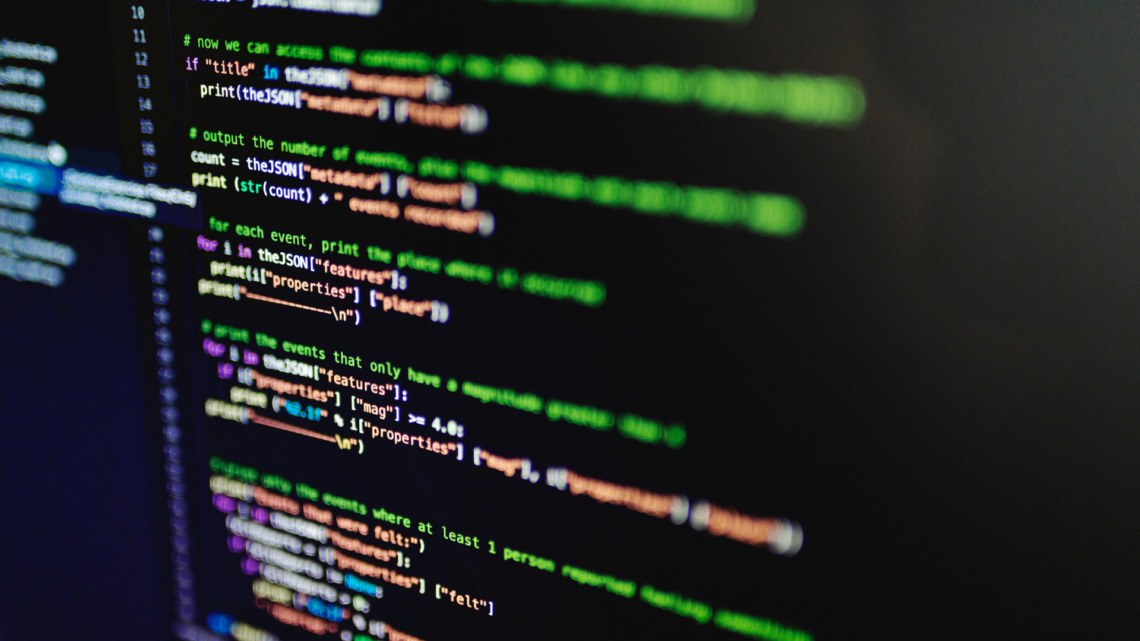
Python Programming for Beginners: A Comprehensive Guide to Getting Started
For those embarking on their journey into the world of coding, Python programming stands out as an excellent starting point for beginners. Known for its simplicity and readability, Python enables new programmers to grasp fundamental concepts without the overwhelming complexity found in other languages. This accessibility makes Python an ideal choice for individuals eager to learn programming.
Many resources exist for individuals wishing to learn Python, ranging from interactive tutorials to comprehensive guides. These materials demystify the coding process, allowing beginners to build a solid foundation in programming. By exploring the fundamentals of Python, learners can develop valuable skills that can be applied to various fields, from web development to data analysis.
The growing demand for Python skills in the job market further underscores its importance. Mastering Python programming not only equips beginners with essential tools for problem-solving but also opens doors to numerous career opportunities. For those looking to dive into programming, starting with Python can be both rewarding and beneficial.
Getting Started with Python
Python is an accessible programming language that offers a variety of features suitable for beginners. Installing Python and grasping its fundamental concepts are the initial steps toward programming proficiency.
Installing Python and Setting Up the Development Environment
To begin using Python, the first step is to install it on a computer. The recommended version is Python 3, as Python 2 is no longer supported. Users can download the latest version from the official Python website.
- Choose the installer compatible with the operating system (Windows, macOS, Linux).
- Run the installer and follow the prompts. Ensure that the option to Add Python to PATH is selected.
- After installation, users can verify the setup by opening a terminal or command prompt and typing Python –version.
Selecting a suitable development environment is also crucial. Popular choices include IDLE, PyCharm, and VS Code. Each offers unique features to assist in writing, debugging, and running Python code.
Understanding Python Syntax and Basic Concepts
Python is known for its clear and readable syntax.
Key components include:
- Variables: Used to store information. Example: x = 10.
- Data Types: Python supports various types like int, float, str, and list.
Operators are essential for performing operations. Operators can be categorized into arithmetic, comparison, and logical operators. Common operators include:
| Operator | Description |
| + | Addition |
| – | Subtraction |
| * | Multiplication |
| / | Division |
Getting familiar with Python keywords is also important. These are reserved words that cannot be used as identifiers, including if, else, for, and while.
To run Python code, users can utilize the interactive Python interpreter or write scripts in a file with a .py extension. Documentation is readily available and serves as a helpful resource for understanding various Python features.
Core Python Concepts and Data Structures
This section outlines essential concepts in Python programming, focusing on functions, data collections, and control flow mechanisms. Understanding these topics is crucial for writing effective and efficient Python code.
Functions, Modules, and Packages
Functions are fundamental building blocks in Python. They allow code to be organized into reusable segments. A function is defined using the def keyword followed by the function name and parentheses.
Modules are Python files (.py) containing functions, classes, or variables. They can be imported into other scripts, enabling code reuse. The standard library includes many modules that come with Python installation, providing a wealth of functionality.
Packages are collections of modules stored in directories. A package makes it easier to structure related modules and share them. This organizational method enhances code maintainability.
Working with Data Collections: Lists, Sets, Dictionaries, and Tuples
Python offers several built-in data structures for managing collections of data.
- Lists are orderedmutable sequences. They can hold elements of different types. A list is defined using square brackets, e.g., my_list = [1, 2, 3].
- Sets are unordered collections of unique elements. They are defined using curly brackets, e.g., my_set = {1, 2, 3}.
- Dictionaries store key-value pairs, allowing for fast data retrieval. They are created using curly braces, e.g., my_dict = {‘key’: ‘value’}.
- Tuples are ordered immutable collections. They are created with parentheses, e.g., my_tuple = (1, 2, 3).
Control Flow: Conditionals and Loops
Control flow statements determine the execution order of code. Conditionals allow for decision-making in programs. The if, eElif, and else keywords help evaluate conditions and execute corresponding blocks of code.
Loops are used to repeat code execution. A for loop iterates over a sequence, such as a list or range, enabling concise iteration.
A while loop continues execution as long as a given condition is true, providing flexibility in code execution.
List comprehensions offer a compact way to generate lists. They consist of an expression followed by a for clause, allowing for concise list creation.
These constructs are vital for controlling program flow and manipulating data efficiently.
Advanced Python Topics for Further Learning
Expanding knowledge in Python can significantly enhance a programmer’s capabilities. The following key areas are essential for further exploration: Object-Oriented Programming, file handling with exception handling, and the use of libraries in web development.
Object-Oriented Programming in Python
Object-Oriented Programming (OOP) is a paradigm that uses “objects” to model real-world entities. In Python, features like classes and inheritance are fundamental.
Classes define the blueprint for objects, enabling encapsulation of data and methods. Using inheritance, a new class can inherit properties from an existing class, promoting code reusability.
Here’s a basic example of a class in Python:
class Animal:
def __init__(self, name):
self.name = name
def speak(self):
return “Some sound”
class Dog(Animal):
def speak(self):
return “Woof!”
This code demonstrates creating a base class and deriving from it. OOP helps in managing complex software through organized code.
Handling Files and Exception Handling
File handling is crucial for reading and writing data effectively. Python provides built-in functions like open(), which can manage files with different modes: r (read), w (write), and a (append).
Exception handling ensures that a program can gracefully handle errors. Using try, except, and finally blocks allows programmers to manage exceptions without crashing the application.
Examples of file handling and exception handling:
try:
with open(‘file.txt’, ‘r’) as file:
data = file.read()
except FileNotFoundError:
print(“File not found.”)
finally:
print(“Execution complete.”)
This structure maintains data integrity and enhances user experience.
Exploring Python Libraries and Web Development
Python’s extensive library ecosystem supports various tasks, including web development. Libraries like Flask and Django streamline the creation of web applications.
Python Package Index (PyPI) hosts thousands of packages that simplify programming tasks. Developers can also explore lambda functions for writing concise functions or generators for efficient iteration.
String manipulation, including regular expressions, can refine input validations and data processing.
import re
pattern = r’d+’
text = “There are 123 apples.”
match = re.findall(pattern, text) # Output: [‘123’]
Mastering these advanced topics empowers programmers to build robust applications.
Real-World Python Applications
Python serves as a versatile tool in various fields, notably in data science and machine learning, as well as in practical coding projects. Its simplicity and readability make it an ideal choice for beginners and experienced programmers alike.
Python in Data Science and Machine Learning
Data science relies heavily on Python for processing and analyzing large datasets. Libraries like Pandas facilitate data manipulation and analysis, while NumPy excels in numerical computing.
Machine learning frameworks such as TensorFlow and sci-kit-learn allow developers to create predictive models with relative ease. These tools enable users to apply statistical techniques and algorithms, making Python a popular choice in the field.
Furthermore, Python integrates seamlessly with data visualization libraries like Matplotlib and Seaborn, improving the interpretation of data through graphical representation. This combination of libraries and tools fosters comprehensive learning pathways for those aiming to excel in data-related fields.
Building Projects with Python
Practical projects are essential for mastering Python programming. Starting with simple tasks, beginners may create scripts to automate mundane tasks using PyCharm as their integrated development environment.
As confidence builds, they can progress to more complex applications such as web development using frameworks like Flask or Django. Building real-world applications enhances problem-solving abilities, which is a key aspect of programming.
Hands-on learning through projects reinforces fundamental concepts and coding skills. By tackling projects from different domains, developers can cultivate a robust portfolio that showcases their expertise in Python and its applications across various industries.


You May Also Like

The Best Google Chrome Extensions

Is Bitcoin Real Money?